Clinical conversation tool
REM Sleep Behavior Disorder Criteria and Health Anxiety Guide
A structured, compassionate way to explain why the current picture does not meet confirmed RBD criteria while still taking chronic health anxiety seriously.
Purpose
Use this when reassurance has stopped working.
This guide is written for a client and clinician conversation where the client has lived with health anxiousness for years and has become stuck on the possibility of REM Sleep Behavior Disorder, Parkinson disease, or a related neurological condition.
The goal is not to dismiss the fear. The goal is to separate the fear from the medical evidence, define the exact threshold for further evaluation, and stop the conversation from becoming another round of compulsive reassurance.
Core stance
“I believe you are frightened. I also do not see the evidence required to conclude that you have RBD. Our work is to respond to the fear in a way that protects your life from being organized around this disease.”
Criteria Map
What confirmed RBD requires
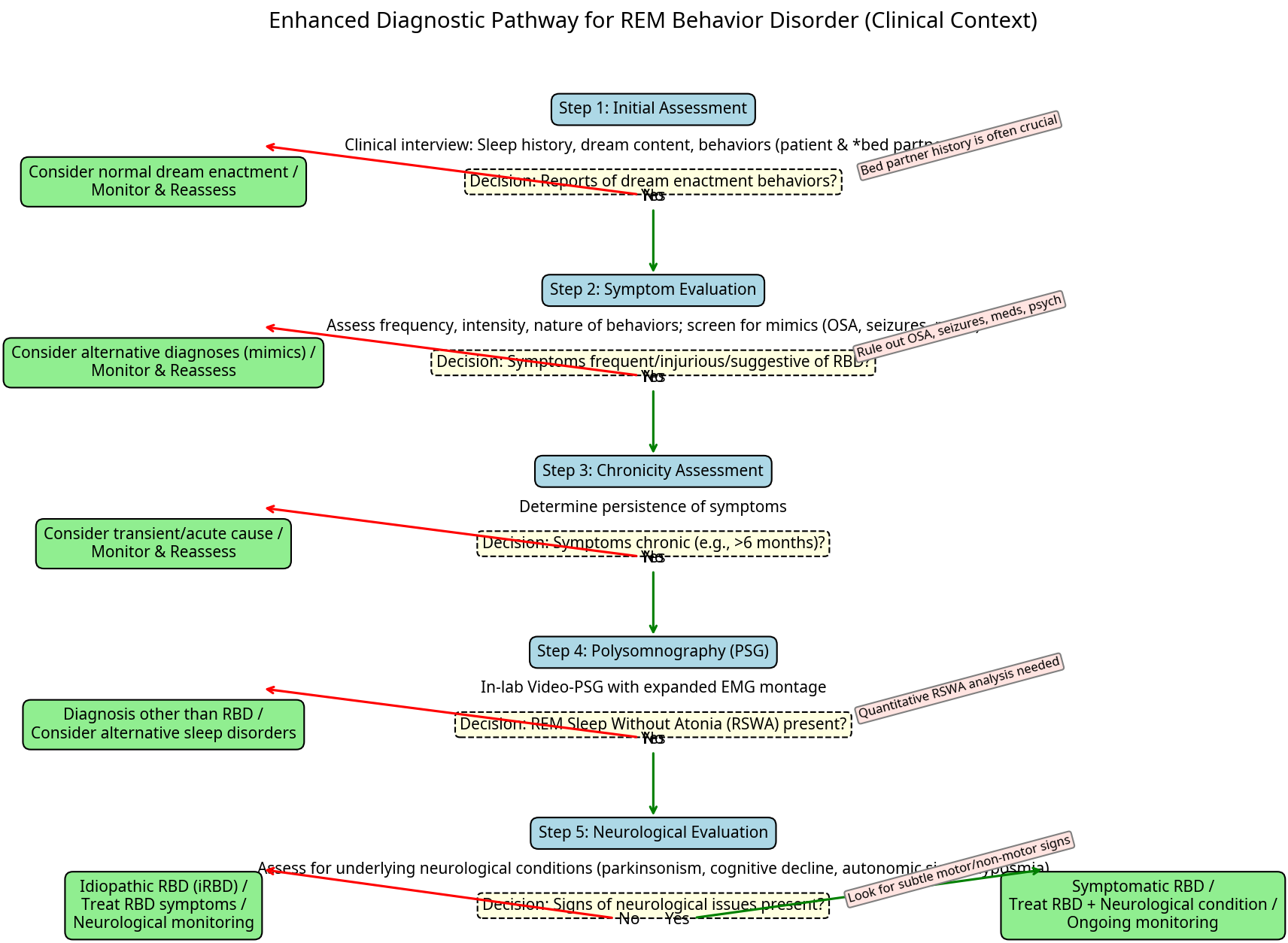
RBD is a sleep medicine diagnosis. A clinician may suspect it from history, but confirmation depends on the pattern of behavior and sleep-study evidence.
Repeated complex dream-enactment behavior
Typical RBD concern involves recurrent sleep-related vocalization or complex motor behavior such as punching, kicking, grabbing, leaping, falling from bed, or injuring oneself or a bed partner.
Current clinical meaning: Anxiety about the disease, vivid dreams, restless sleep, or isolated movements do not equal this pattern.
REM-timed episodes or clear dream enactment
RBD behaviors occur during REM sleep or are strongly presumed to be REM-related from history and dream enactment.
Current clinical meaning: Waking scared, reviewing dreams, or noticing body sensations after waking does not prove REM-timed enactment.
REM sleep without atonia on PSG
The objective hallmark is REM sleep without normal muscle paralysis, measured on an overnight polysomnogram with EMG and video context.
Current clinical meaning: Without this finding, the criteria for confirmed RBD are not met.
Not better explained by another cause
Clinicians also consider obstructive sleep apnea, NREM parasomnias, nightmares, PTSD-related sleep disturbance, medications, substances, seizures, insomnia, and anxiety-driven hypervigilance.
Current clinical meaning: The more prominent the health-anxiety cycle is, the more carefully the team should avoid turning every sensation into disease evidence.
Clinical Reasoning
Why the current picture does not meet confirmed RBD criteria
The fear is intense, but fear is not a criterion.
Years of disease-focused worry can make normal sleep events feel meaningful. The diagnostic question is narrower: are there repeated REM-linked, complex, potentially injurious dream-enactment behaviors and objective REM without atonia?
Normal sleep can look strange from the inside.
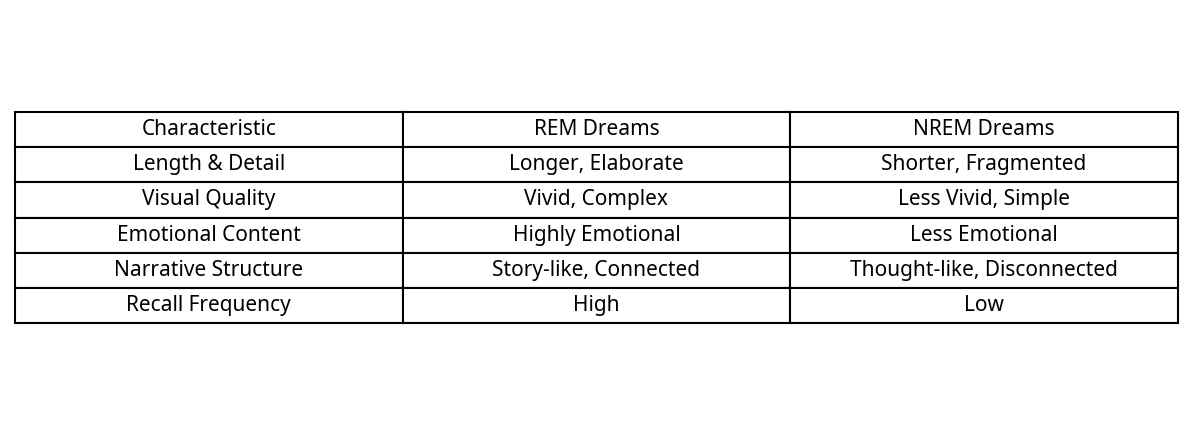
Vivid dreams, brief twitches, sleep starts, talking in sleep, restless nights, and waking with adrenaline are common and can be amplified by monitoring. These experiences may deserve care, but they do not automatically point to RBD.
Rechecking the same evidence keeps the loop alive.
When the clinical threshold has not been met, repeated internet searching, body scanning, and requests for certainty tend to bring short relief followed by stronger doubt.
A plan is stronger than reassurance.
The clinician can name exactly what would change the plan. Until that threshold is reached, treatment energy should move toward sleep stability, anxiety treatment, and reducing compulsive health-checking.
| Experience | Usually means | RBD concern rises when |
|---|---|---|
| Vivid or violent dream | Dream content can be vivid without a sleep disorder. | The body repeatedly acts out the dream with complex movements. |
| Brief twitch or jerk | Often a benign sleep transition or normal movement. | Movements are repeated, coordinated, forceful, and linked to dream enactment. |
| Waking anxious after a dream | Fear response, nightmare, stress, or health anxiety may be active. | A bed partner observes repeated REM-period enactment or injury risk. |
| Reading that RBD predicts Parkinson disease | Information exposure, not personal evidence. | A sleep specialist confirms RBD and discusses individualized monitoring. |
Client-Clinician Language
Words that validate without feeding the obsession
When the client asks, “Can you promise this is not RBD?”
“I cannot promise a lifetime of zero medical risk. What I can say is that the current evidence does not meet the clinical threshold for confirmed RBD. Chasing 100% certainty has become part of the suffering, so we are going to work with a clear threshold instead of endless reassurance.”
When the client says, “But I felt something in my sleep.”
“I hear that the sensation scared you. A sensation is real, but it is not automatically diagnostic evidence. We will ask whether it matches the RBD pattern: repeated, complex, dream-enacting behavior, observed or documented, with REM without atonia on sleep study.”
When the client searches for Parkinson disease risk
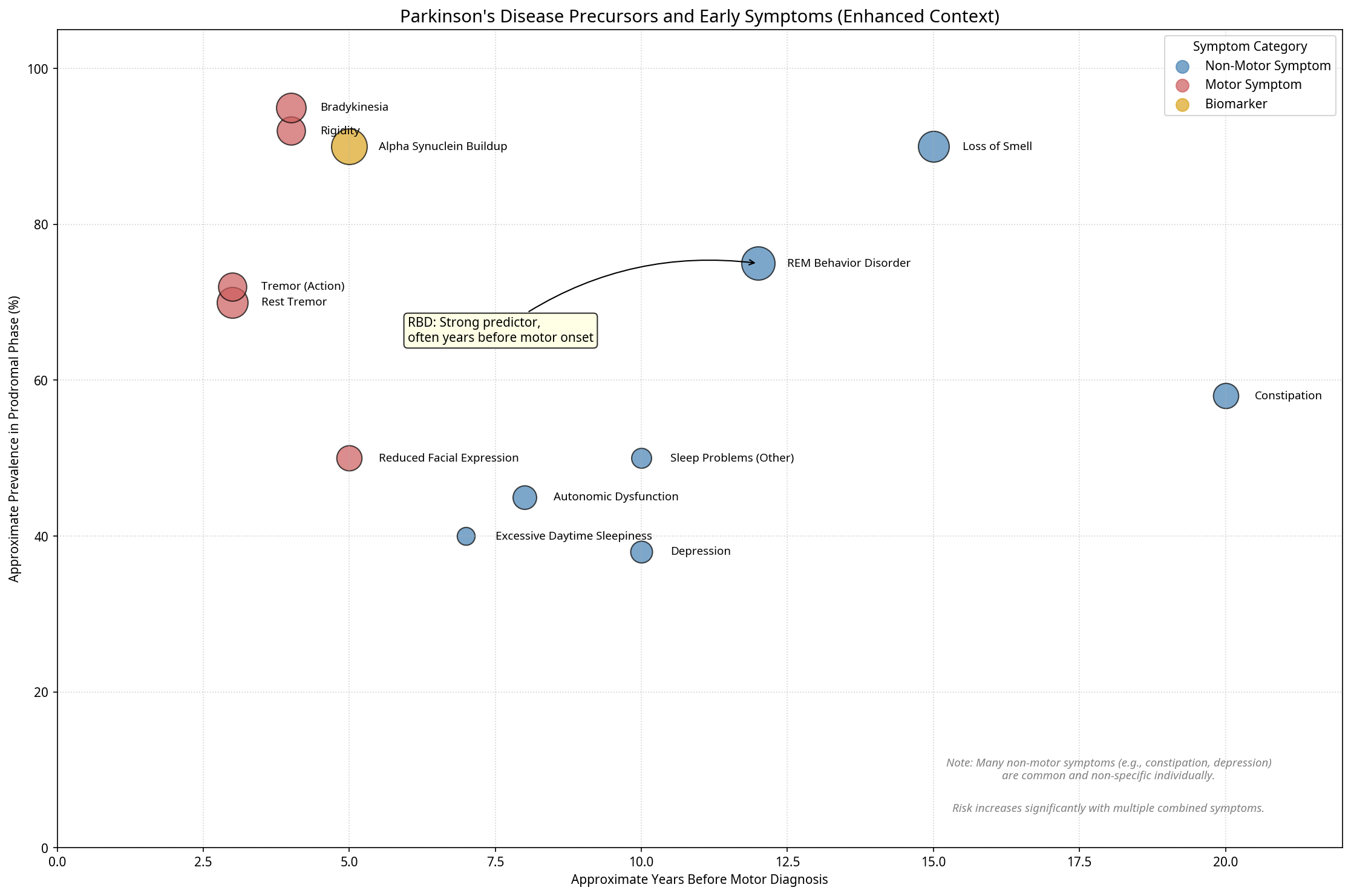
“The RBD-Parkinson link matters for people with confirmed RBD. Your mind is borrowing risk information from a diagnosis that has not been established. We will not use population statistics as proof about your body.”
When the client wants another reassurance cycle
“I will not abandon the medical question. I also will not help anxiety move the goalpost every time it feels uncertain. The plan is: monitor for specific red flags, follow routine care, and practice not solving the fear with repeated checking.”
Health Anxiety
The loop that keeps the disease fear alive
Chronic health anxiousness often feels like careful problem-solving, but the pattern can become self-reinforcing: fear appears, checking briefly lowers distress, uncertainty returns, and the mind treats the return of anxiety as new evidence.
dream, twitch, article, memory
“This means RBD”
Google, body scan, reassurance
then doubt returns
Replacement plan
- Name the obsession: “This is the RBD fear showing up again.”
- Return to the threshold: “Has there been repeated observed complex dream enactment or injury risk?”
- Delay checking: Wait at least 30 minutes before any search or reassurance request.
- Do the next valued action: sleep routine, work, relationship, movement, therapy homework.
- Review only at planned times: bring actual red-flag data to the clinician rather than debating every sensation in real time.
Medical Thresholds
What would justify reopening sleep evaluation
A clear threshold protects both safety and anxiety treatment. These items should prompt clinical review, especially if recurrent or worsening.
Recurrent injurious behavior
Falling out of bed, punching, kicking, grabbing, or leaving the bed in a way that injures the client or bed partner.
Observed complex dream enactment
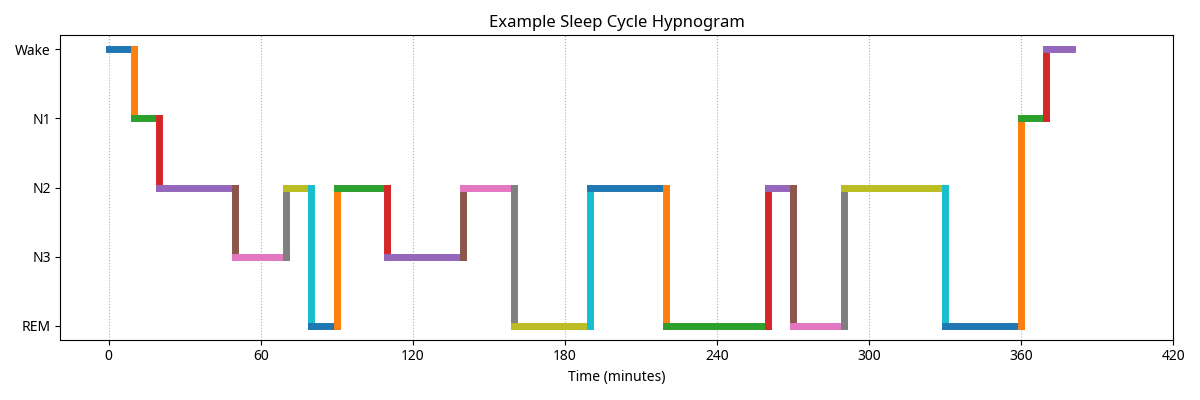
A bed partner repeatedly observes coordinated dream-enacting behaviors, particularly later in the night when REM sleep is more common.
Documented REM without atonia
An overnight video polysomnogram demonstrates elevated muscle tone during REM sleep.
New neurological changes
New persistent motor symptoms, cognitive changes, fainting, substantial smell loss, or other clinically meaningful changes should be handled through routine medical care.
What does not reopen the evaluation by itself
One scary dream, reading another article, feeling anxious after waking, noticing normal twitches, replaying old memories, or needing certainty again. These are cues for anxiety treatment, not automatic cues for more medical testing.
Clinician Notes
How to keep the discussion therapeutic
Validate distress, not the feared conclusion.
The client is not “making it up.” The suffering is real. The clinical task is to avoid joining the conclusion that anxiety is demanding.
Use one stable explanation.
Repeat the same criteria-based summary. Novel explanations often become new material for compulsive analysis.
Shift from certainty to thresholds.
A good threshold says when to act and when not to act. It reduces both neglect and over-response.
Assign behavior change.
Track reassurance requests, search time, and checking rituals. Reduce them gradually while preserving routine medical care.
Do not overstate “benign.”
Over-reassurance can backfire. Prefer: “Based on current evidence, this does not meet criteria, and here is what would change the plan.”
Keep sleep safety proportionate.
Basic sleep hygiene and a reasonably safe sleep environment are appropriate. Extreme safety rituals can become another compulsion.
Client Handout
One-page summary to leave with
- My fear is real, but fear is not the same as diagnostic evidence.
- Confirmed RBD requires repeated complex dream-enactment behavior and sleep-study evidence of REM sleep without atonia.
- Vivid dreams, twitches, waking anxious, and internet stories do not establish RBD.
- We have a threshold for reopening medical evaluation.
- Until that threshold is met, the treatment target is the health-anxiety cycle: checking, reassurance seeking, and intolerance of uncertainty.
Session close
“I am allowed to care about my health without treating every sensation as an emergency. I can follow the agreed medical threshold and return my attention to the life I am trying to live.”
Evidence Base
References and clinical anchors
- American Academy of Sleep Medicine clinical practice guideline for management of REM sleep behavior disorder in adults.
- Sleep medicine CME summary of ICSD-3-TR diagnostic criteria for RBD.
- NHS guidance on health anxiety, checking, and reassurance seeking.
- Association for Behavioral and Cognitive Therapies fact sheet on health anxiety and CBT.
- Centre for Clinical Interventions health anxiety self-help resources.
Educational resource. Last reviewed July 15, 2026. This page supports clinical conversation and does not replace diagnosis or individualized medical advice.